

Introduction
How to Start Affiliate Marketing if you have spent any time looking for ways to generate an income online, you have undoubtedly run into the term “affiliate marketing.” It is often painted as the ultimate internet dream: set up a simple link, go to sleep, and wake up to a bank account overflowing with passive income commissions.
But let’s clear the air right from the start. If you treat affiliate marketing like a get-rich-quick lottery ticket, you are going to join the 90% of beginners who quit within their first three months.
In 2026, the digital landscape is highly competitive. Audiences are smarter, search engines are more sophisticated, and social media algorithms change overnight. However, for those who treat it as a legitimate business, build genuine trust, and follow a structured framework, affiliate marketing remains one of the most profitable, low-risk, and scalable online business models in existence.
This comprehensive guide will strip away the fluff and give you a raw, realistic, and highly practical blueprint on how to start affiliate marketing from scratch this year.
What Exactly is Affiliate Marketing? (Beyond the Hype)
At its absolute core, affiliate marketing is simply digital matchmaking. You find a product or service you like, you promote it to an audience, and you earn a piece of the profit for each sale or action that happens through your unique referral link.
Think of it like a real estate agent. The agent doesn’t build the house, and they don’t manage the property after it’s sold. Their sole job is to connect a qualified buyer with the right seller. When the deal closes, they get a percentage of the sale.
In the online space, this ecosystem is made up of four moving parts:
- The Merchant (The Seller): This is the creator or brand selling the product. It can be a massive enterprise selling physical goods (like Amazon), a tech company selling software (like a web hosting provider), or an individual selling an online course.
- The Affiliate (You): The publisher, blogger, or content creator who introduces the merchant’s product to potential buyers.
- The Consumer: The everyday user who reads your content, clicks your link, and purchases the product.
- The Affiliate Network: A middleman platform (like Impact.com or PartnerStack) that manages the tracking links, handles the reporting, and ensures you get paid your commissions on time.
Why Affiliate Marketing is the Best Business Model for Beginners
How to Start Affiliate Marketing if you are starting an online business from scratch, creating your own physical or digital product requires significant upfront capital, months of development, inventory management, and a customer support team to handle complaints and refunds.
With affiliate marketing, you skip all of that. You don’t have to deal with shipping, product defects, or customer service. Your only objective is to drive targeted, high-intent traffic to someone else’s proven offer.
Step 1: Choosing a Profitable, Sustainable Niche
The biggest mistake beginners make is trying to build a website or social media page that covers everything. They want to write about fitness on Monday, cryptocurrency on Wednesday, and travel on Friday.
When you try to speak to everyone, you end up speaking to no one. You need to pick a specific niche.
A niche is a specialized segment of a larger market. Instead of focusing on the broad topic of “Health,” you focus on “Keto Dieting for Busy Mothers over 40.” Instead of targeting “Software,” you target “Email Marketing Tools for Small E-commerce Brands.”
How to Find Your Sweet Spot
To find a niche that you won’t abandon after two weeks, look at the intersection of three specific elements:
- Interest and Knowledge: You don’t need a PhD in the topic, but you must have enough interest to research and write 50 to 100 articles about it without losing your mind.
- Market Demand: Are people actively searching for solutions within this niche? You can use free tools like Google Trends or basic keyword research tools to see if the topic has consistent interest.
- Monetization Potential: Are companies actually spending money to advertise in this niche? If brands are pouring money into ads, it means there is a highly profitable customer base waiting to buy.
High-Paying Niches to Consider in 2026
While you can find affiliate programs for almost anything, the most lucrative niches generally fall into three massive, evergreen industries:
- Wealth & Business: Web hosting, SEO software, email marketing tools, funnel builders, and financial applications. These often offer high commissions or recurring monthly payouts.
- Health & Wellness: Fitness equipment, specialized diets, mental health apps, and organic supplements.
- Technology & Lifestyle: Smart home setups, content creation gear (cameras, microphones), specialized hobbies, and remote work infrastructure.
Step 2: Selecting Your Primary Content Platform
Now that you know what you are talking about, you need a digital storefront where people can find your content. While you can post affiliate links across multiple networks, you should focus 80% of your energy on mastering one primary platform first.
Option A: Building an Authority Blog (Highly Recommended)
Creating your own self-hosted WordPress website is hands-down the best long-term strategy on how to start affiliate marketing. Why? Because you completely own the asset. You are not at the mercy of a sudden Instagram or TikTok algorithm change that wipes out your visibility overnight.
With a blog, you focus on search engine optimization (SEO). People go to Google with specific problems (e.g., “Best lightweight WordPress themes for blogging”), find your article, read your recommendation, and click your link. This is high-intent traffic, meaning these users are already in a buying mindset.
Option B: YouTube and Video Content
YouTube is the world’s second-largest search engine. If you enjoy talking on camera or creating screen-share tutorials, YouTube is an absolute powerhouse for affiliate conversions. Video builds trust incredibly fast. Seeing a real human review a software tool or unbox a physical product makes an audience much more comfortable clicking the affiliate links dropped in the video description.
Option C: Social Media Platforms (Instagram, TikTok, LinkedIn)
Social media is excellent for building quick engagement and driving rapid bursts of traffic. Platforms like LinkedIn are fantastic for B2B (business-to-business) software affiliate marketing, while TikTok and Instagram excel at visual, lifestyle, and consumer products. The downside? Social media content has a very short shelf life. A post you make today might be completely invisible in 48 hours, whereas a blog post can drive sales for years.
Step 3: Finding and Joining the Right Affiliate Programs
Do not just sign up for random programs. You want to partner with reputable brands that have high-quality products, reliable tracking systems, and competitive payout rates.
Affiliate programs generally fall into three distinct buckets:
1. High-Volume, Low-Paying Programs
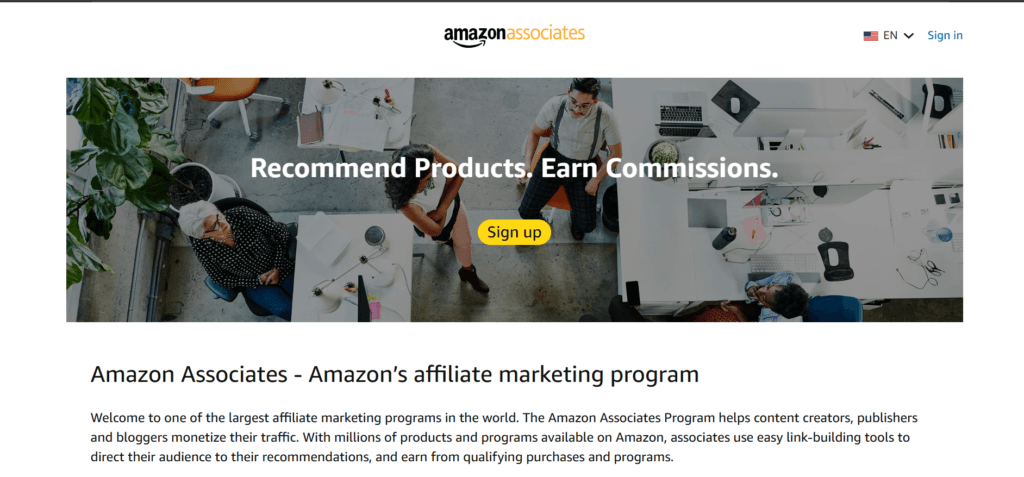
The classic example here is Amazon Associates. You can promote almost any product on earth, and everyone trusts buying from Amazon. However, the commission rates are notoriously low (usually between 1% and 3%), and their cookie window lasts only 24 hours. You need massive amounts of traffic to make substantial money here.
2. High-Paying, Low-Volume Programs
These are typically specialized, high-ticket digital products or premium courses. For example, a software platform that costs $500 may offer a 10% commission. You only need a few sales a month to generate a decent income, but the target audience is much smaller and harder to convert.
3. High-Paying, High-Volume Programs (The Sweet Spot)
These are software-as-a-service (SaaS) products, web hosting companies, and digital utilities. They often offer high payouts or, even better, recurring commissions. If you refer a user to a software service that costs $50 a month, and the company offers a 30% recurring commission, you get paid every single month that the user keeps their subscription active.
The Best Affiliate Networks for Beginners in 2026
Instead of reaching out to companies individually, you can join major affiliate networks that house thousands of brand partnerships under one roof:
- Impact.com: An incredibly modern, user-friendly platform that hosts massive global brands, tech utilities, and lifestyle software.
- PartnerStack: The absolute gold standard for B2B software and SaaS programs. It offers some of the highest-quality recurring commissions on the web.
- ShareASale & CJ Affiliate: Two long-standing networks with immense directories of physical and digital products across every niche imaginable.
Step 4: Crafting a Winning Content Strategy
Once your website is up and you are approved by a few affiliate programs, it’s time to create content. This is where most beginners fail because they write dry, boring summaries or spammy “buy this now” articles.
To convert a casual reader into a paying customer, you must create Value-First Content. Your goal is to solve a user’s problem, guide their purchasing decision, and provide insights they can’t find anywhere else.
Here are the three types of content that generate 90% of all affiliate revenue:
1. Deep-Dive Product Reviews
Before people buy a product, they type [Product Name] review into search engines. They want to know the pros, the cons, the pricing, and whether it’s worth their hard-earned money.
- How to do it right: Be incredibly honest. Share what you don’t like about the product along with what you love. If a product has flaws, point them out. Your honesty builds massive trust, making your final recommendation far more persuasive.
2. Direct Product Comparisons (Versus Battles)
When buyers are stuck between two top choices, they look for comparison guides (e.g., “Brand A vs Brand B”). These readers have their wallets out; they just need a final nudge to choose one over the other.
- How to do it right: Create a clear breakdown of features, performance, speed, support, and pricing. Conclude with a definitive recommendation based on different user types (e.g., “Choose Brand A if you are on a tight budget, but go with Brand B if you need advanced features”).
3. Complete, Actionable Tutorials (How-To Guides)
Show, don’t just tell. Write an exhaustive guide showing the audience how to achieve a specific result using the tool you are promoting. For example, if you are an affiliate for an SEO software tool, don’t just say “buy this tool.” Write a guide titled “How to Find Low-Competition Keywords in 10 Minutes,” and use screenshots of the tool in action. The reader will naturally want to click your link and get the tool to follow along with your tutorial.
Step 5: Getting Target Traffic to Your Content (SEO Essentials)
You can write the most brilliant article on the internet, but if nobody sees it, your affiliate income will be exactly zero. To drive consistent, free, predictable visitors to your website, you must understand the basics of Search Engine Optimization (SEO).
If you are running a WordPress site, using an SEO optimization plugin like Rank Math is a game-changer. It acts as an interactive checklist ensuring your content meets search engine standards.
The Human-First SEO Checklist
- Search Intent Realism: Before writing, type your target keyword into Google. Look at the top 5 results. What kind of content are they? If they are all long-form guides, don’t try to rank with a short 500-word summary. Give the user what Google has already proven they want to see.
- Strategic Keyword Placement: Place your main focus keyword naturally in your H1 Title, within the first 150 words of your introduction, inside at least two H2 subtitles, and throughout your image Alt text.
- Optimize the Snippet: Your Title Tag and Meta Description are your organic billboards. Write a compelling, click-worthy headline that promises a solution. Include modifiers like “Comprehensive Guide,” “Step-by-Step,” or the current year “2026” to make it pop.
- Maximize Site Speed and Mobile Usability: Over 60% of web traffic happens on mobile devices. If your site takes more than three seconds to load, or if your buttons are too small to tap on a smartphone screen, visitors will bounce instantly, harming your search rankings. Clean up your site design using tools like Elementor to make sure it looks flawless and responsive across all screens.
Step 6: Mastering the Art of the Click (Conversion Optimization)
Driving traffic to your page is only half the battle. Once the reader is on your site, you need to design your content in a way that encourages them to click your affiliate links naturally.
Don’t Hide Your Links
Do not make your readers scroll all the way to the bottom of a 3,000-word article to find your recommendation. Many users have short attention spans. Place a brief summary or a “Quick Recommendation” box right at the top of the article within the first few paragraphs.
Use High-Contrast Call to Action (CTA) Buttons
Text links are great, but visual buttons get clicked far more often. Use custom buttons with contrasting colors that stand out from the rest of your page layout. Keep your CTA text action-oriented and clear. Instead of writing a generic “Click Here,” use compelling text like:
- “Get 50% Off Brand Now”
- “Start Your Free Trial”
- “Check Current Price on Amazon”
Keep It Transparent and Ethical
Always include a clear, honest affiliate disclosure near the top of your post. State openly that you earn a small commission if someone purchases through your link, at no extra cost to them. Not only is this a legal requirement by regulatory bodies like the FTC, but it also deepens the trust your audience has in your brand. Modern web users appreciate honesty.
Ready to Launch Your Affiliate Business?
Affiliate marketing isn’t about gaming an algorithm or spamming links across the web. It is about building a sustainable digital asset that serves an audience, answers their burning questions, and streamlines their purchasing decisions.
The strategy is straightforward: choose your niche, establish your home base platform, partner with stellar brands on networks like Impact and PartnerStack, write high-value content, optimize it meticulously for search visibility, and continuously refine your calls to action. Success won’t happen overnight, but with consistency, the compounding effect of well-optimized content will start turning those initial clicks into a highly profitable online business.
The tools are ready, the blueprints are laid out, and the market is waiting. The only step left is for you to take action and build it.
Take the Next Step
How to Start Affiliate Marketing Building a profitable affiliate site requires premium, blazing-fast web infrastructure that keeps your visitors engaged and ensures your content ranks high on search engines. Don’t let slow loading speeds ruin your conversion rates. [Click here to get started with Hostinger today] and launch your professional, optimized WordPress website with a free domain and easy one-click setup!